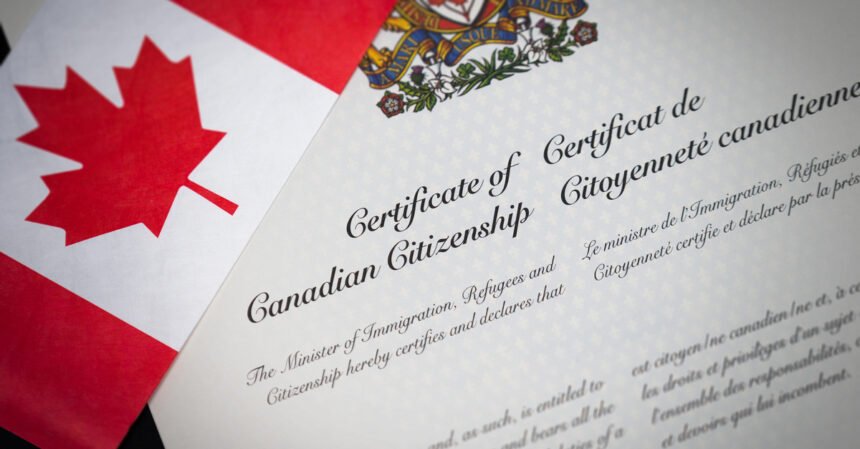
Becoming a Canadian citizen is an important milestone for many immigrants who have built their lives in Canada through work, study, family sponsorship, refugee protection, or permanent residency pathways. Canadian citizenship offers long-term security, voting rights, access to a Canadian passport, expanded employment opportunities, and a deeper sense of belonging within Canadian society.
However, the citizenship application process can feel complicated for many permanent residents. Applicants must meet eligibility requirements, calculate physical presence accurately, prepare documents carefully, complete language requirements, study for the citizenship test, and avoid mistakes that may delay processing or result in refusal.
Understanding the complete citizenship process before applying can significantly improve the chances of a smooth and successful application.
This comprehensive guide explains how to apply for Canadian citizenship in 2026, including eligibility requirements, application timelines, citizenship test preparation, language requirements, interview expectations, oath ceremony details, processing delays, and common mistakes applicants should avoid.
What Is Canadian Citizenship?
Canadian citizenship is the legal status that gives individuals full membership rights in Canada.
Citizens can:
- Vote in Canadian elections
- Apply for a Canadian passport
- Access certain government jobs
- Participate fully in Canadian civic life
Citizenship also provides stronger long-term security than permanent residency.
Permanent Residency vs Citizenship
Permanent residents can:
- Live and work in Canada
- Access many social benefits
- Study in Canada
However:
- Permanent residents can lose status under certain circumstances
- Permanent residents cannot vote federally
- Permanent residents cannot obtain Canadian passports
Who Processes Canadian Citizenship Applications?
Canadian citizenship applications are processed by Immigration, Refugees and Citizenship Canada (IRCC).
Official IRCC website:
https://www.canada.ca/en/immigration-refugees-citizenship.html
IRCC manages:
- Citizenship eligibility
- Application review
- Citizenship testing
- Oath ceremonies
- Citizenship certificates
Basic Eligibility Requirements for Canadian Citizenship
Applicants generally must:
- Be permanent residents
- Meet physical presence requirements
- File taxes if required
- Demonstrate language ability if applicable
- Pass the citizenship test if applicable
- Avoid prohibitions preventing citizenship approval
Permanent Resident Status Requirement
Applicants must hold:
- Valid permanent resident status
Applicants cannot normally qualify if they are:
- Under removal orders
- Under immigration investigation
- Facing unresolved status issues
Physical Presence Requirement
One of the most important requirements is physical presence in Canada.
Applicants usually must demonstrate:
- At least 1,095 days physically present in Canada within the required eligibility period
Official physical presence calculator:
https://eservices.cic.gc.ca/rescalc/resCalcStartNew.do
Time Spent Before Permanent Residency
Certain temporary resident time may count partially toward physical presence calculations.
Examples may include time spent as:
- International students
- Temporary foreign workers
- Protected persons
However:
- Limits and conditions apply
Tax Filing Requirements
Applicants may need to demonstrate:
- Income tax filing compliance
Depending on their circumstances.
The Canada Revenue Agency (CRA) oversees Canadian tax administration.
Official CRA website:
https://www.canada.ca/en/revenue-agency.html
Language Requirements for Citizenship
Applicants between certain ages may need to prove:
- English or French language ability
Accepted proof may include:
- Approved language tests
- Canadian educational credentials
- Government-funded language program results
Accepted Language Tests
Common accepted tests include:
- IELTS General Training
- CELPIP
- TEF Canada
Citizenship Test Requirement
Many adult applicants must complete:
- The Canadian citizenship test
The test evaluates knowledge of:
- Canadian history
- Government
- Geography
- Rights and responsibilities
- Political system
- Symbols and culture
The Discover Canada Study Guide
IRCC provides the official study resource.
Official guide:
https://www.canada.ca/en/immigration-refugees-citizenship/services/canadian-citizenship/become-canadian-citizen/citizenship-test.html
The guide covers:
- Canadian history
- Indigenous peoples
- Government institutions
- Laws and freedoms
How the Citizenship Test Works
The test is often:
- Multiple choice
- Conducted online or in person
Applicants generally must achieve:
- A passing score determined by IRCC requirements
Preparing Effectively for the Citizenship Test
Study the Official Guide Thoroughly
The official material is the primary source for test content.
Practice With Sample Questions
Practice improves:
- Confidence
- Time management
- Familiarity with question styles
Focus on Canadian Government Structure
Many applicants underestimate:
- Government-related questions
Learn Key Historical Events
Important historical themes often appear on the test.
Understand Rights and Responsibilities
Citizenship responsibilities are commonly tested.
Step-by-Step Canadian Citizenship Application Process
Step 1: Confirm Eligibility
Applicants should carefully verify:
- Physical presence
- Tax filing history
- Language eligibility
- Permanent resident status
Step 2: Gather Required Documents
Documents may include:
- Permanent resident card
- Passport copies
- Travel history
- Language proof
- Identification documents
Step 3: Complete the Application Form
Applicants must complete the correct IRCC citizenship forms.
Accuracy is extremely important.
Step 4: Pay Government Fees
Official fee information:
https://www.canada.ca/en/immigration-refugees-citizenship/services/canadian-citizenship/become-canadian-citizen/eligibility/fees.html
Fees may include:
- Processing fees
- Right of citizenship fees
Step 5: Submit the Application
Applications may be submitted:
- Online
- Through approved submission methods
Depending on current IRCC procedures.
Step 6: Application Review and Acknowledgement
IRCC reviews applications for:
- Completeness
- Eligibility
- Missing information
Incomplete applications may be:
- Returned
- Delayed
Step 7: Biometrics or Additional Requests if Required
Some applicants may receive:
- Additional document requests
- Identity verification requests
Step 8: Citizenship Test Invitation
Eligible applicants are invited to complete the citizenship test.
Step 9: Citizenship Interview if Required
Some applicants may attend interviews with citizenship officers.
Interviews may review:
- Language ability
- Residence history
- Identity documents
- Travel records
Step 10: Citizenship Ceremony and Oath
Successful applicants attend:
- Citizenship ceremonies
Applicants must take:
- The Oath of Citizenship
Official citizenship ceremony information:
https://www.canada.ca/en/immigration-refugees-citizenship/services/canadian-citizenship/become-canadian-citizen/citizenship-ceremony.html
What Happens After Becoming a Citizen?
New citizens may:
- Apply for Canadian passports
- Register to vote
- Update government records
Official Canadian passport information:
https://www.canada.ca/en/immigration-refugees-citizenship/services/canadian-passports.html
Canadian Citizenship Processing Timeline in 2026
Processing times vary depending on:
- Application volume
- Security checks
- Document verification
- Interview requirements
- IRCC operational capacity
Official processing times:
https://www.canada.ca/en/immigration-refugees-citizenship/services/application/check-processing-times.html
Factors That May Delay Citizenship Applications
Several issues may slow processing.
These include:
- Missing documents
- Travel history discrepancies
- Incomplete applications
- Language proof issues
- Security reviews
- Residency concerns
Common Mistakes Applicants Make
Incorrect Physical Presence Calculations
Miscalculating days in Canada is one of the most common mistakes.
Applicants should use:
- The official IRCC calculator
Failing to Report Travel History Accurately
Travel records must be consistent and complete.
Discrepancies may raise concerns.
Submitting Incomplete Applications
Missing signatures or documents can delay processing significantly.
Providing Expired Documents
Expired identification may create complications.
Ignoring IRCC Requests
Applicants should respond quickly to:
- Additional information requests
- Interview notices
- Testing invitations
Poor Citizenship Test Preparation
Some applicants underestimate the test.
Studying thoroughly improves success rates.
Misunderstanding Language Requirements
Applicants should verify:
- Accepted proof formats
- Age exemptions
- Language test validity
Criminal or Legal Issues
Certain criminal matters may affect citizenship eligibility.
Applicants facing legal complications may benefit from professional legal advice.
Residency and Fraud Concerns
IRCC carefully reviews:
- Residency claims
- Identity information
- Misrepresentation risks
Providing false information can result in:
- Refusal
- Delays
- Potential legal consequences
Citizenship for Children
Children may qualify through:
- Parent applications
- Citizenship grants
- Citizenship by descent in certain cases
Rules differ depending on individual circumstances.
Dual Citizenship in Canada
Canada allows:
- Dual citizenship
However:
- Other countries may have different rules
Applicants should confirm whether their original country permits dual nationality.
Canadian Citizenship and Voting Rights
Citizens may participate in:
- Federal elections
- Provincial elections
- Municipal elections
Official Elections Canada website:
https://www.elections.ca/
Canadian Citizenship Benefits
Benefits may include:
- Passport access
- Voting rights
- Greater travel flexibility
- Long-term security
- Expanded employment eligibility
Preparing for the Citizenship Interview
Applicants attending interviews should:
- Bring requested documents
- Review travel history
- Prepare identification
- Answer questions honestly and clearly
Tips for a Smooth Citizenship Process
Keep Copies of Everything
Maintain organized records of:
- Forms
- Receipts
- Travel records
- Supporting documents
Monitor IRCC Account Updates
Applicants should check application status regularly.
Avoid Long Absences During Processing
Frequent travel may complicate communication and scheduling.
Prepare Early for the Test
Consistent preparation reduces stress.
Maintain Accurate Address Information
IRCC correspondence must be received promptly.
When Professional Immigration Advice May Help
Some applicants may benefit from legal or immigration assistance if they have:
- Complex travel histories
- Criminal matters
- Residency disputes
- Previous refusals
- Misrepresentation concerns
Financial Costs Beyond Government Fees
Applicants may also face:
- Translation expenses
- Language test fees
- Legal consultation costs
- Passport renewal costs
Frequently Asked Questions
How long does Canadian citizenship processing take?
Processing times vary depending on application complexity and IRCC workloads.
Do I need to take a citizenship test?
Many adult applicants must complete the test unless exempt.
Can I leave Canada while my application is processing?
Yes, although applicants should maintain communication access and attend required appointments.
What happens if I fail the citizenship test?
IRCC may provide additional opportunities depending on circumstances.
Can permanent residents lose status before citizenship approval?
Yes, under certain legal or residency circumstances.
Conclusion
Applying for Canadian citizenship is a major step that represents long-term commitment, stability, and participation in Canadian society. Although the process can appear complex, careful preparation, accurate documentation, proper test preparation, and understanding IRCC requirements can significantly improve the likelihood of a successful outcome.
The most important factors for applicants include accurately calculating physical presence, maintaining strong documentation, understanding language and testing requirements, and avoiding common application mistakes that may create unnecessary delays.
As Canada continues welcoming immigrants from around the world in 2026 and beyond, Canadian citizenship remains one of the most valuable long-term immigration achievements available to permanent residents seeking security, opportunity, and full civic participation in the country.