Boston is one of the most historically significant cities in the United States, offering visitors a unique opportunity to explore the foundations of American history through preserved landmarks, colonial architecture, revolutionary sites, museums, churches, cemeteries, and public spaces. Few cities in America combine history, walkability, culture, education, and architecture as effectively as Boston.
As one of the oldest cities in the United States, Boston played a central role in the American Revolution, early colonial settlement, political activism, maritime trade, and intellectual development. Today, travelers can walk through centuries of history while exploring cobblestone streets, red-brick neighborhoods, waterfront districts, and iconic landmarks connected to some of the nation’s most important historical events.
One of Boston’s greatest advantages for visitors is its compact and highly walkable city center. Many of the city’s most famous landmarks are located within a relatively small area, making self-guided walking tours both practical and rewarding.
This comprehensive self-guided walking tour of Boston’s most iconic historical landmarks is designed for first-time visitors and history enthusiasts exploring the city in 2026. The guide covers major attractions, historical context, walking routes, museums, architecture, food stops, safety advice, transportation information, and practical travel tips for an unforgettable Boston experience.
Why Boston Is Ideal for a Walking Tour
Boston’s historic center is highly walkable because of:
- Compact neighborhoods
- Preserved colonial streets
- Accessible public transportation
- Concentrated historical landmarks
Visitors can explore:
- Revolutionary War sites
- Historic churches
- Museums
- Waterfront districts
- Colonial cemeteries
Within a manageable walking distance.
Understanding Boston’s Historical Importance
Boston played a major role in:
- The American Revolution
- Colonial trade
- Early American politics
- Abolition movements
- Higher education development
The city remains deeply connected to:
- American independence
- Revolutionary activism
- Constitutional history
Best Time to Take a Walking Tour in Boston
Boston can be explored year-round, although some seasons are more comfortable.
Spring
Spring offers:
- Mild temperatures
- Blooming parks
- Comfortable walking conditions
Summer
Summer provides:
- Longer daylight hours
- Outdoor events
- Busy tourism season
However:
- Temperatures and crowds may increase.
Autumn
Autumn is one of the best seasons because of:
- Cooler weather
- Fall foliage
- Comfortable sightseeing conditions
Winter
Winter travel offers:
- Fewer tourists
- Historic atmosphere
- Seasonal events
Although:
- Cold weather may affect walking comfort.
Preparing for the Self-Guided Tour
Before beginning the walking tour, visitors should prepare:
- Comfortable walking shoes
- Water bottles
- Weather-appropriate clothing
- Portable phone chargers
- Maps or navigation apps
Official Boston tourism website:
https://www.bostonusa.com/
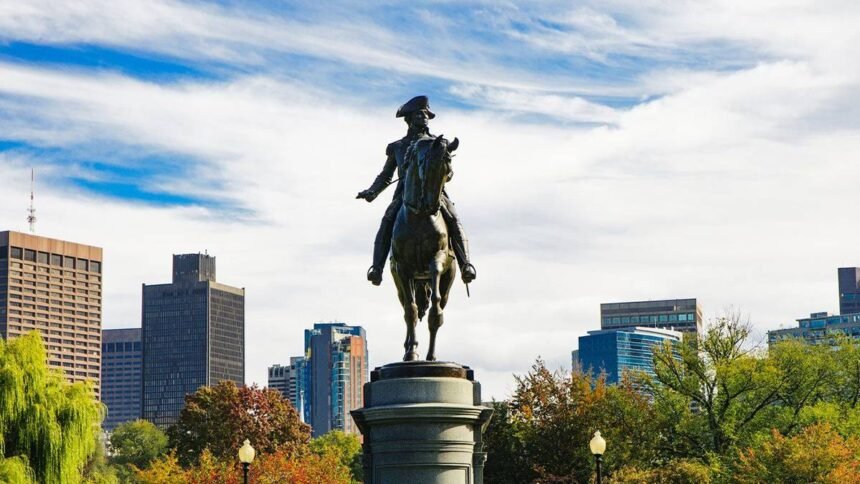
Starting Point: Boston Common
Boston Common is the oldest public park in the United States.
Why Boston Common Matters
The park has served historically as:
- A public gathering space
- A military camp area
- A political protest site
Today it remains a central landmark and starting point for exploring Boston.
What to See at Boston Common
Visitors can enjoy:
- Historic monuments
- Walking paths
- Seasonal gardens
- Public events
Massachusetts State House
Located beside Boston Common, the Massachusetts State House is one of the city’s most recognizable landmarks.
Official website:
https://www.mass.gov/orgs/massachusetts-state-house
Architectural Highlights
The building features:
- Gold dome architecture
- Federal-style design
- Historic legislative chambers
Historical Importance
The State House remains an important center of:
- Massachusetts government
- Political history
- Civic identity
Park Street Church
Park Street Church is a historic landmark connected to:
- Abolitionist movements
- Religious history
- Early social reform
Granary Burying Ground
One of Boston’s most famous cemeteries, Granary Burying Ground contains graves connected to the American Revolution.
Notable Historical Figures Buried Here
Visitors may find graves associated with:
- Samuel Adams
- Paul Revere
- John Hancock
King’s Chapel and King’s Chapel Burying Ground
King’s Chapel reflects Boston’s colonial religious history.
What Makes It Significant
The chapel combines:
- Georgian architecture
- Colonial history
- Historic cemetery grounds
Benjamin Franklin Statue and Boston Latin School Site
This area commemorates:
- Benjamin Franklin
- America’s oldest public school tradition
Old Corner Bookstore
The Old Corner Bookstore is associated with:
- Literary history
- Publishing culture
- Nineteenth-century Boston
Old South Meeting House
Official website:
https://www.bostontea partyship.com/
The Old South Meeting House played a major role in:
- Revolutionary organizing
- Political activism
- The events leading to the Boston Tea Party
Historical Importance
Thousands gathered here before:
- The Boston Tea Party protest
Old State House
Official website:
https://www.bostonhistory.org/
The Old State House is one of Boston’s most historically important buildings.
Why It Matters
The building served as:
- Colonial government headquarters
- Revolutionary political center
Boston Massacre Site
Near the Old State House is the site of:
- The Boston Massacre
Understanding the Boston Massacre
The event became a major catalyst for:
- Anti-British sentiment
- Revolutionary resistance
Faneuil Hall Marketplace
Faneuil Hall is often called:
- The “Cradle of Liberty”
Official website:
https://faneuilhallmarketplace.com/
Historical Significance
The building hosted:
- Revolutionary speeches
- Public meetings
- Political debates
Quincy Market
Adjacent to Faneuil Hall, Quincy Market offers:
- Food vendors
- Historic architecture
- Shopping opportunities
Recommended Food Stops
Travelers may try:
- New England clam chowder
- Lobster rolls
- Boston cream pie
Paul Revere House
Official website:
https://www.paulreverehouse.org/
The Paul Revere House is one of Boston’s oldest surviving buildings.
Why Visitors Love This Site
The house provides insight into:
- Colonial domestic life
- Revolutionary history
- Boston architecture
North End Neighborhood
Boston’s North End combines:
- Italian-American culture
- Historic streets
- Revolutionary landmarks
Food Experiences in the North End
The area is famous for:
- Italian bakeries
- Pasta restaurants
- Cannoli shops
Old North Church
Official website:
https://www.oldnorth.com/
The Old North Church is one of Boston’s most iconic Revolutionary War landmarks.
“One If By Land, Two If By Sea”
The church is associated with:
- Paul Revere’s midnight ride
- Revolutionary signaling events
Copp’s Hill Burying Ground
This historic cemetery offers:
- Colonial gravestones
- Harbor views
- Revolutionary history
Charlestown and the Bunker Hill Monument
Crossing into Charlestown allows visitors to explore another major Revolutionary War site.
Bunker Hill Monument
Official National Park Service website:
https://www.nps.gov/bost/index.htm
The monument commemorates:
- The Battle of Bunker Hill
- Early Revolutionary War conflict
Climbing the Monument
Visitors can climb the monument for:
- Panoramic city views
- Historical perspective
USS Constitution Museum
Official website:
https://ussconstitutionmuseum.org/
The USS Constitution is the world’s oldest commissioned naval vessel still afloat.
Why It’s Worth Visiting
Visitors learn about:
- Early American naval history
- Maritime warfare
- Boston’s naval heritage
Boston Harbor Walks and Waterfront Areas
Boston’s waterfront offers:
- Harbor scenery
- Walking paths
- Historical maritime context
Harbor History
Boston Harbor played a major role in:
- Colonial trade
- Revolutionary protests
- Maritime development
Additional Optional Stops
Travelers with extra time may also explore:
- Beacon Hill
- Boston Public Library
- Harvard University
- Museum of Fine Arts
Beacon Hill
Beacon Hill is known for:
- Federal-style architecture
- Gas-lit streets
- Historic homes
Acorn Street
Acorn Street is one of Boston’s most photographed streets.
Harvard University Day Extension
Official website:
https://www.harvard.edu/
Travelers can extend their tour to nearby Cambridge.
Why Harvard Is Significant
Harvard represents:
- American academic history
- Colonial education
- Prestigious architecture
Public Transportation in Boston
Boston’s MBTA system helps travelers move efficiently.
Official MBTA website:
https://www.mbta.com/
Transportation Options Include
- Subway lines
- Buses
- Commuter rail
- Ferries
Walking Safety Tips
Boston is generally walkable and tourist-friendly.
Travelers should still:
- Watch traffic carefully
- Stay aware in crowded areas
- Wear comfortable shoes
Budgeting for a Boston Walking Tour
Boston can be expensive depending on travel style.
Major Costs May Include
- Accommodation
- Museum admissions
- Dining
- Transportation
Ways to Save Money
Use Public Transportation
The MBTA reduces taxi costs.
Explore Free Historical Sites
Many landmarks can be viewed without admission fees.
Visit During Shoulder Seasons
Spring and autumn may offer better accommodation rates.
Photography Tips for Boston
Boston offers excellent photography opportunities.
Best Locations for Photos
Popular photography spots include:
- Acorn Street
- Boston Common
- Charles River
- Beacon Hill
- Waterfront districts
Cultural Etiquette and Respectful Tourism
Visitors should:
- Respect historic sites
- Follow museum rules
- Avoid damaging monuments
Why the Freedom Trail Remains Important
Much of this walking route overlaps with:
- Boston’s Freedom Trail
Official Freedom Trail information:
https://www.thefreedomtrail.org/
The Freedom Trail helps visitors understand:
- Revolutionary history
- Colonial Boston
- American independence
Frequently Asked Questions
How long does the walking tour take?
The complete self-guided route may take a full day depending on stops and museum visits.
Is Boston walkable for tourists?
Yes, Boston is one of America’s most walkable historic cities.
What is the best season to visit Boston?
Autumn and spring generally provide the most comfortable walking conditions.
Are Boston’s historical sites family-friendly?
Many landmarks and museums are suitable for families and educational travel.
Is the Freedom Trail worth following?
Yes, it provides one of the best introductions to American Revolutionary history.
Conclusion
Boston remains one of the most historically rich and walkable cities in the United States, offering visitors an extraordinary opportunity to explore the foundations of American history through preserved landmarks, colonial architecture, museums, cemeteries, churches, and revolutionary sites.
A self-guided walking tour allows travelers to move at their own pace while discovering the stories, people, and events that shaped both Boston and the United States. From Boston Common and the Massachusetts State House to the Old North Church and Bunker Hill Monument, each landmark reveals another chapter in America’s political, cultural, and revolutionary history.
Beyond its historical importance, Boston also offers excellent food culture, waterfront scenery, vibrant neighborhoods, academic institutions, and architectural beauty that make the city rewarding for both first-time visitors and returning travelers.
As heritage tourism, urban preservation, and cultural travel continue evolving in 2026 and beyond, Boston remains one of the most essential destinations in North America for travelers seeking immersive historical exploration, walkable city experiences, and a deeper understanding of America’s origins.