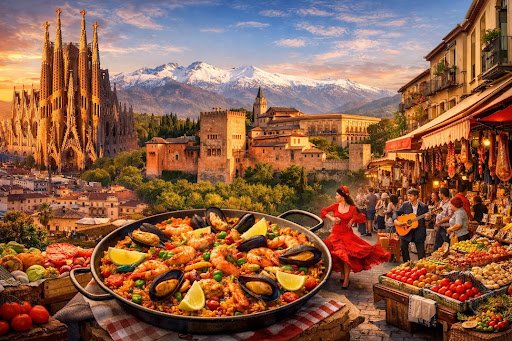
Barcelona is one of Europe’s most captivating destinations, attracting travelers with its extraordinary architecture, Mediterranean coastline, world-famous cuisine, vibrant street life, artistic heritage, and rich Catalan culture. The city offers a remarkable combination of historic neighborhoods, innovative gastronomy, Gothic landmarks, beachside relaxation, and modernist masterpieces that make it especially appealing for architecture enthusiasts and food lovers.
Few cities blend art, design, and culinary experiences as seamlessly as Barcelona. Visitors can spend mornings exploring the surreal creations of Antoni Gaudí, afternoons wandering through medieval alleyways and bustling food markets, and evenings enjoying tapas, seafood, Catalan cuisine, and rooftop dining experiences.
Barcelona is also highly walkable and well-connected by public transportation, making it possible to experience a significant amount of the city within a carefully planned four-day itinerary.
This comprehensive four-day Barcelona itinerary is designed specifically for architecture enthusiasts and food-focused travelers visiting in 2026. It covers iconic landmarks, hidden gems, food markets, restaurants, neighborhoods, transportation advice, budgeting strategies, cultural etiquette, and practical travel tips to help visitors experience the best of Barcelona efficiently and enjoyably.
Why Barcelona Is Perfect for Architecture and Food Lovers
Barcelona stands out because it offers:
- World-famous modernist architecture
- Exceptional Mediterranean cuisine
- Historic Gothic districts
- Michelin-starred restaurants
- Vibrant food markets
- Beachfront dining
- Strong artistic identity
The city’s unique character comes from the blend of:
- Catalan culture
- Mediterranean lifestyle
- Creative urban design
- Historic preservation
Best Time to Visit Barcelona
Barcelona can be visited year-round, although some seasons are more comfortable for sightseeing.
Spring
Spring offers:
- Pleasant temperatures
- Outdoor dining opportunities
- Fewer crowds than peak summer
Summer
Summer brings:
- Beach weather
- Festivals
- Longer daylight hours
However:
- Tourist crowds become significantly larger
Autumn
Autumn provides:
- Comfortable weather
- Excellent food experiences
- Reduced congestion
Winter
Winter travel offers:
- Lower accommodation costs
- Fewer tourists
- Milder weather than much of Europe
Understanding Barcelona’s Neighborhoods
Barcelona’s districts each offer different atmospheres.
Gothic Quarter (Barri Gòtic)
The Gothic Quarter features:
- Medieval streets
- Historic architecture
- Traditional plazas
- Tapas bars
Eixample
Eixample is known for:
- Wide boulevards
- Modernist architecture
- Gaudí landmarks
- Upscale dining
El Born
El Born combines:
- Boutique shopping
- Cocktail bars
- Historic charm
- Creative food scenes
Gràcia
Gràcia offers:
- Local atmosphere
- Independent cafes
- Artistic culture
Transportation in Barcelona
Barcelona’s public transportation system is efficient and tourist-friendly.
Official Barcelona tourism website:
https://www.barcelonaturisme.com/
Metro System
The Metro is the easiest way to travel between major attractions.
Walking
Many central districts are highly walkable.
Taxis and Ride-Sharing
Taxis are widely available across the city.
Day 1: Gaudí Masterpieces and Classic Tapas
The first day focuses on Barcelona’s most iconic architecture and traditional culinary experiences.
Morning: Sagrada Família
Official website:
https://sagradafamilia.org/
The Sagrada Família is Barcelona’s most famous landmark and one of the world’s most extraordinary architectural projects.
Designed by:
- Antoni Gaudí
The basilica combines:
- Gothic influences
- Organic forms
- Complex symbolism
- Stunning stained glass
Tips for Visiting Sagrada Família
Book Tickets Early
Timed-entry tickets often sell out.
Visit Early in the Day
Morning visits may reduce crowd levels.
Explore the Interior Thoroughly
The interior lighting changes beautifully throughout the day.
Late Morning: Passeig de Gràcia
Passeig de Gràcia is one of Barcelona’s most elegant avenues.
Highlights include:
- Luxury boutiques
- Modernist buildings
- Cafes
Casa Batlló
Official website:
https://www.casabatllo.es/
Casa Batlló is one of Gaudí’s most imaginative works.
The building features:
- Curved facades
- Mosaic surfaces
- Organic interior design
Casa Milà (La Pedrera)
Official website:
https://www.lapedrera.com/
Casa Milà is famous for:
- Wave-like stone architecture
- Rooftop chimneys
- Innovative structural design
Lunch: Traditional Tapas Experience
Barcelona offers excellent tapas culture.
Popular dishes include:
- Patatas bravas
- Jamón ibérico
- Croquetas
- Pan con tomate
- Gambas al ajillo
Afternoon: Gothic Quarter Exploration
The Gothic Quarter offers:
- Narrow medieval streets
- Hidden courtyards
- Historic churches
Barcelona Cathedral
The cathedral combines:
- Gothic architecture
- Religious history
- Beautiful cloisters
Evening: Rooftop Dining Experience
Barcelona’s rooftop restaurants provide:
- City skyline views
- Mediterranean cuisine
- Sunset experiences
Day 2: Markets, Modernism, and Catalan Cuisine
The second day focuses on food culture and artistic architecture.
Morning: La Boqueria Market
Official website:
https://www.boqueria.barcelona/
La Boqueria is one of Europe’s most famous food markets.
Visitors can enjoy:
- Fresh seafood
- Iberian ham
- Fruit juices
- Local cheeses
- Catalan specialties
Tips for Visiting La Boqueria
Arrive Early
Morning visits are less crowded.
Explore Beyond Tourist Stalls
Some interior vendors offer more authentic experiences.
Midday: El Raval and MACBA Area
El Raval combines:
- Contemporary culture
- Street art
- International food scenes
MACBA
Official museum website:
https://www.macba.cat/
The Museu d’Art Contemporani de Barcelona focuses on:
- Contemporary art
- Modern exhibitions
Lunch: Catalan Cuisine
Traditional Catalan dishes include:
- Escalivada
- Botifarra
- Fideuà
- Suquet de peix
Afternoon: Palau de la Música Catalana
Official website:
https://www.palaumusica.cat/
This UNESCO-listed concert hall is one of Barcelona’s architectural treasures.
Highlights include:
- Decorative stained glass
- Modernist interiors
- Intricate sculptures
Evening: Wine Bars and Pintxos
Barcelona offers excellent:
- Wine bars
- Pintxos restaurants
- Local cava experiences
Day 3: Park Güell, Beaches, and Seafood
The third day combines outdoor architecture with coastal dining.
Morning: Park Güell
Official website:
https://parkguell.barcelona/
Park Güell showcases Gaudí’s imaginative urban design.
Highlights include:
- Mosaic artwork
- Curved benches
- Panoramic city views
- Organic architectural forms
Tips for Visiting Park Güell
Wear Comfortable Shoes
The park includes hills and uneven pathways.
Book Timed Entry
Popular sections may require advance reservations.
Midday: Gràcia Neighborhood
Gràcia offers:
- Independent cafes
- Local plazas
- Slower atmosphere
It provides a contrast to central tourist zones.
Lunch: Mediterranean Seafood
Barcelona’s seafood scene is exceptional.
Popular dishes include:
- Paella
- Grilled octopus
- Fresh sardines
- Seafood rice dishes
Afternoon: Barceloneta Beach
Barceloneta combines:
- Beach culture
- Waterfront promenades
- Seafood restaurants
Port Vell Area
The marina district offers:
- Harbor views
- Shopping
- Walking areas
Evening: Fine Dining or Michelin-Starred Experience
Barcelona contains numerous:
- Michelin-starred restaurants
- Innovative tasting menus
- Experimental cuisine venues
Advance reservations are strongly recommended.
Day 4: Montjuïc, Museums, and Farewell Dining
The final day focuses on panoramic views, museums, and relaxed exploration.
Morning: Montjuïc Hill
Montjuïc offers:
- Gardens
- Museums
- Scenic viewpoints
- Historic sites
Montjuïc Cable Car
Official information:
https://www.telefericdemontjuic.cat/
The cable car provides:
- Panoramic city views
- Coastal scenery
National Art Museum of Catalonia (MNAC)
Official website:
https://www.museunacional.cat/
The museum contains:
- Romanesque art
- Gothic collections
- Catalan artistic heritage
Midday: Poble-sec Neighborhood
Poble-sec is known for:
- Tapas streets
- Local atmosphere
- Food culture
Lunch: Casual Tapas Crawl
Travelers can sample:
- Small plates
- Vermouth
- Local specialties
Afternoon: Relaxed Shopping and Coffee Stops
Barcelona offers:
- Independent boutiques
- Artisan products
- Specialty coffee shops
Evening: Farewell Dinner With Mediterranean Views
A final evening meal may include:
- Catalan seafood
- Local wines
- Sunset dining experiences
Food Experiences Every Visitor Should Try
Tapas
Small sharing plates remain central to Spanish dining culture.
Cava
Catalonia’s sparkling wine is widely enjoyed.
Seafood
Fresh Mediterranean seafood is a major highlight.
Local Markets
Food markets reveal authentic culinary traditions.
Architecture Highlights Beyond Gaudí
Although Gaudí dominates Barcelona’s architectural identity, other architects contributed significantly.
Modernisme Movement
Barcelona’s Modernisme style features:
- Decorative facades
- Organic forms
- Artistic craftsmanship
Historic Gothic Architecture
Medieval structures remain central to the city’s identity.
Budgeting for Barcelona
Barcelona can accommodate:
- Luxury travelers
- Mid-range visitors
- Budget-conscious tourists
Major Travel Expenses
Potential costs include:
- Accommodation
- Attraction tickets
- Dining
- Transportation
Saving Money in Barcelona
Purchase Attraction Tickets Early
Online booking may reduce costs.
Use Public Transportation
Metro passes improve affordability.
Eat Outside Major Tourist Squares
Local neighborhoods often offer better value.
Safety Tips for Barcelona
Barcelona is generally safe for tourists.
However:
- Pickpocketing can occur in crowded areas
Travelers should:
- Protect valuables
- Stay aware in tourist districts
- Avoid displaying expensive items openly
Cultural Etiquette in Barcelona
Barcelona has a strong Catalan identity.
Visitors should respect:
- Local customs
- Catalan culture
- Dining etiquette
Best Areas to Stay in Barcelona
Eixample
Excellent for:
- Architecture lovers
- Central access
- Upscale hotels
Gothic Quarter
Ideal for:
- Historic atmosphere
- Nightlife
- Walkability
El Born
Perfect for:
- Food lovers
- Boutique experiences
- Artistic atmosphere
Frequently Asked Questions
Is four days enough for Barcelona?
Yes, four days allows visitors to experience major attractions, food culture, and architecture comfortably.
What is the best time to visit Barcelona?
Spring and autumn generally offer the best balance of weather and manageable crowds.
Do I need to book Gaudí attractions in advance?
Yes, advance reservations are highly recommended.
Is Barcelona expensive for food lovers?
Barcelona offers options for various budgets, from affordable tapas bars to luxury fine dining.
What food should I try in Barcelona?
Popular choices include tapas, seafood, Catalan dishes, cava, and market specialties.
Conclusion
Barcelona is one of Europe’s most rewarding cities for travelers who appreciate architecture, culinary experiences, and cultural exploration. Its blend of Gaudí masterpieces, Gothic heritage, Mediterranean scenery, food markets, rooftop dining, and neighborhood diversity creates a travel experience that feels both artistic and deeply authentic.
A carefully planned four-day itinerary allows visitors to experience the city’s most iconic architectural landmarks while also exploring local food traditions, vibrant neighborhoods, beaches, museums, and contemporary cultural scenes.
Whether travelers are admiring the surreal details of the Sagrada Família, wandering through medieval streets, tasting fresh seafood by the Mediterranean, or discovering hidden tapas bars in local districts, Barcelona offers a balance of creativity, history, and lifestyle unlike almost any other European destination.
As tourism, culinary innovation, and architectural preservation continue evolving in 2026 and beyond, Barcelona remains one of the world’s premier destinations for travelers seeking inspiration, flavor, beauty, and unforgettable urban experiences.